WHICH DO YOU THINK IS HEALTHIER-ICE CREAM, FROZEN YOGURT OR GELATO?

frozen yogurt-505636479In recent years, frozen yogurt and gelato have become very popular alternatives to ice cream. Many believe that these treats are healthier options. There are several differences that set these deserts apart, making some better choices than others.

•Ice cream must contain at least 10% milk fat and cream to be legally considered ice cream. It is high in calories, sugar and fat. A scoop of vanilla ice cream has about 275 calories
•Yogurt does not have the milk fat requirement as ice cream; it is made with cultured milk. Because of the freezing process, there are no probiotics in frozen yogurt. Frozen yogurt allows for substitutions such as honey in place of sugar. A scoop of vanilla frozen yogurt has about 221 calories
•Although commonly mistaken for ice cream, gelato has a different composition that is denser than ice cream. Gelato tends to have less milk fat, calories and sugar. A scoop of vanilla gelato can have 150-200 calories.
All of these treats are delicious but should always be eaten in moderation. Due to the caloric contents, sugars and fats in each, over consumption can lead to complications in your diet, which can cause obesity or diabetes.


All content of this newsletter is intended for general information purposes only and is not intended or implied to be a substitute for professional medical advice, diagnosis or treatment. Please consult a medical professional before adopting any of the suggestions on this page. You must never disregard professional medical advice or delay seeking medical treatment based upon any content of this newsletter. PROMPTLY CONSULT YOUR PHYSICIAN OR CALL 911 IF YOU BELIEVE YOU HAVE A MEDICAL EMERGENCY.

Did You Know Vitamin C Helps Protect Your Vision From the Leading Cause of Blindness?

Young brunette woman with orange fruit

Vitamin C benefits your health in several ways, one of which is helping to protect your vision from cataracts- the number one cause of blindness in the world.

Cataracts are caused by protein buildup and oxidation which cloud the lens of the eye.  If left untreated, the condition can advance and eventually lead to a loss of vision.

The risk of developing cataracts increases with age.  However, studies indicate that consuming a diet rich in vitamin C can cut the risk of cataract progression by as much as one-third. Vitamin C helps reduce this risk because of its strength as an antioxidant, which prevents the eye from oxidizing and becoming cloudy.

Vitamin C is not produced naturally by the body, so we have to obtain our daily dose by taking supplements or eating foods such as:

  • Red or green peppers
  • Broccoli
  • Strawberries
  • Oranges
  • Cabbage
  • Leafy greens

The daily recommended dose of vitamin C is 90 mg a day for men and 75 mg a day for women. However it is advised that you speak with a doctor to determine a healthy dose for you.

May is Healthy Vision Month; during this time Jamaica Hospital Medical Center is encouraging people to take National Eye Institute’s Five Steps for protecting their sight. The five steps include eating a healthy diet that promotes eye health, receiving a comprehensive eye exam, knowing your family’s health history, wearing protective eye wear while working or playing sports and wearing sunglasses to protect your eyes from the sun’s UV rays.

The Department of Ophthalmology at Jamaica Hospital Medical Center offers a wide range of comprehensive medical, diagnostic and surgical services for those with vision and eye conditions. To make an appointment, please call 718-206-5900.

All content of this newsletter is intended for general information purposes only and is not intended or implied to be a substitute for professional medical advice, diagnosis or treatment. Please consult a medical professional before adopting any of the suggestions on this page. You must never disregard professional medical advice or delay seeking medical treatment based upon any content of this newsletter. PROMPTLY CONSULT YOUR PHYSICIAN OR CALL 911 IF YOU BELIEVE YOU HAVE A MEDICAL EMERGENCY.

Asthma and Allergies

The month of May has been designated as “National Asthma and Allergy Month by the Asthma and Allergy Foundation of America. Spring is the beginning of the peak season for asthma and allergy sufferers. Asthma affects over 25 million Americans, 6.3 million of them are under the age of 18. More than 50 million people in the United States have some type of allergy and that number is increasing every year.
If a person knows that they have asthma, it is suggested that they avoid things that can trigger an attack. Triggers are anything that the body is sensitive to that causes the airways to become inflamed.
Common triggers are:
• Pollen
• Changes in weather
• Dust
• Stress
• Exercise
• Chemicals
Symptoms of asthma are shortness of breath, wheezing, chest tightness, and coughing. There is no cure for asthma however there are medications that can help to keep it controlled.
Allergies are a very common chronic illness that lasts a long time or occurs frequently. Allergies occur when the body comes in to contact with a substance that causes the immune system to overreact.
Some of the more common substances people are allergic to are:
• Food
• Insect bites
• Latex
• Mold
• Pets
• Pollen
• Medications
Symptoms of allergies may include watery eyes, sneezing, itchiness, rash, hives and difficulty breathing. Severe cases can lead to anaphylactic shock which is potentially life threatening due to a lowering of the blood pressure and a dilation of the blood vessels, if not treated quickly.
Doctors can perform tests to see how you respond to small amounts of allergens.  There are ways to treat allergies, the best method though is to avoid things that you know will cause a reaction in the first place. There are medications available to control allergic reactions and doctors can give injections that act to train the immune system to not overreact to these substances.
To schedule an appointment at Jamaica Hospital with a physician to discuss controlling asthma and allergies, please call 718-206-7001.

For more hospital events, highlights, health and  fitness tips, visit us on 

 and follow us on Twitter 

All content of this newsletter is intended for general information purposes only and is not intended or implied to be a substitute for professional medical advice, diagnosis or treatment. Please consult a medical professional before adopting any of the suggestions on this page. You must never disregard professional medical advice or delay seeking medical treatment based upon any content of this newsletter. PROMPTLY CONSULT YOUR PHYSICIAN OR CALL 911 IF YOU BELIEVE YOU HAVE A MEDICAL EMERGENCY.

Diabetes Friendly Recipes

Living with diabetes is already difficult enough without having to worry about your diet restrictions. You can enjoy healthy meals, even if time is tight in your schedule. Here are some quick, diabetes conscious recipes to keep you going through the day.

  1. Start your morning off with this delicious fruit and almond smoothie. You will need one cup of almond milk, one cup of frozen strawberries and peaches, and 2 ounces of flavored Greek yogurt of your choice. Combine all of the ingredients in a blender, blend until smooth and thick, pour and enjoy! See the full recipe here: http://www.diabetes.org/mfa-recipes/recipes/2012-04-fruit-and-almond-smoothie.html
  2. This healthy chicken and vegetable casserole is cooked in one pan and makes an easy mid-day meal. You will need chicken breasts, broccoli, spinach, wild brown rice, and cheese of your choice. See the full recipe here: http://www.diabeticlivingonline.com/recipe/chicken/chicken-and-wild-rice-casserole
  3. End your day with this orange soy salmon recipe. This heart-healthy meal can be prepared, popped in the microwave, and served in less than 15 minutes. Salmon fillets are cooked over spinach and served alongside a veggie mix, all drizzled with a tangy topping of orange juice, soy sauce, fresh ginger, hoisin sauce, and sesame oil. See the full recipe here: http://www.culinaryarts.com/Recipes/recipefiles/orange_soy_glazed_salmon.htm


Cooking a diabetes-friendly meal doesn’t have to be a time-consuming endeavor that traps you in the kitchen. Whether you have type 1 or type 2 diabetes, are prediabetic, or cook for someone who has diabetes, you can still enjoy a healthy and delicious dish!

Jamaica Hospital provides a support group service for diagnosed diabetics along with prevention programs for those at risk. For more information on managing your diabetes, please call 718-206-7088.

All content of this newsletter is intended for general information purposes only and is not intended or implied to be a substitute for professional medical advice, diagnosis or treatment. Please consult a medical professional before adopting any of the suggestions on this page. You must never disregard professional medical advice or delay seeking medical treatment based upon any content of this newsletter. PROMPTLY CONSULT YOUR PHYSICIAN OR CALL 911 IF YOU BELIEVE YOU HAVE A MEDICAL EMERGENCY.

Jamaica Hospital: Raising Awareness About Food Allergies

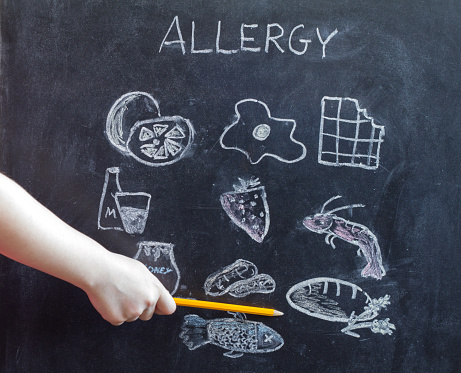
Allergy food and beverages on blackboardMay has been designated as Food Allergy Action Month in an effort to educate Americans about food allergies and to support those who suffer from them.

Recent surveys indicate that 15 million Americans now suffer from food allergies. This number indicates that food allergies are much more common than previously believed and the number of people with allergies is steadily growing. It is now estimated that one out of every 13 children has a food allergy.

An allergic reaction occurs when the body’s immune system mistakenly identifies a food component as a hazardous substance and attacks it. The effects of food allergies may appear on the skin, in the respiratory passage, or in the gastrointestinal tract. The symptoms of food allergies may vary from mild to severe, and in extreme cases, they can even be fatal.

Minor reactions include:
• Skin rash
• Eczema
• Diarrhea
• Stomach cramps
• Nausea

Serious Reactions Include:
• Obstructive inflammation of the tongue and respiratory tract
• Panting and wheezing
• Lack of oxygen, leading to blue lips
• Unconsciousness
• Drop in pulse rate

Anaphylaxis is a very serious allergic reaction that can cause death. This type of allergic reaction requires immediate action and medical attention. If you or a loved one has a severe food allergy, you must be prepared for an emergency. Learn the signs and symptoms of anaphylaxis and know what the emergency care plan is. It may include the administration of epinephrine, a life-saving drug.

Over 170 different foods have been reported to cause an allergic reaction, but the food products that cause the most reactions are:
• Soy
• Milk
• Fish / Shellfish
• Peanuts / Tree Nuts
• Eggs
• Wheat

There is currently no cure for food allergies. To prevent an allergic reaction, it is important for the person with the allergy to stay away from foods that cause symptoms. Contact with even the smallest amounts of the allergen can cause serious problems. To avoid an allergic reaction, take the following precautions:
• Learn to carefully read food labels and ask about ingredients in prepared foods
• Wash your hands with soap and warm water before and after touching food
• Use clean, uncontaminated utensils when preparing foods
• Educate others about food allergies.

Every year in the United States, approximately 30,000 individuals are brought to hospital emergency departments and 150 people die due to severe allergic reactions. Jamaica Hospital joins the effort to raise awareness about food allergies and urges everyone to learn more about this growing, yet manageable issue.

All content of this newsletter is intended for general information purposes only and is not intended or implied to be a substitute for professional medical advice, diagnosis or treatment. Please consult a medical professional before adopting any of the suggestions on this page. You must never disregard professional medical advice or delay seeking medical treatment based upon any content of this newsletter. PROMPTLY CONSULT YOUR PHYSICIAN OR CALL 911 IF YOU BELIEVE YOU HAVE A MEDICAL EMERGENCY.

National Senior Health and Fitness Day

May 25, 2016, is National Senior Health and Fitness Day.  This observance is designed to shed light on the importance of the health and fitness of older adults.

Exercise is essential to improving health at any age, and seniors are not an exception.  A low-impact exercise routine can benefit your health by stretching and strengthening muscles, reducing stress and can even help to lower high blood pressure.

Staying fit doesn’t have to require a gym.  You can work out, at your own pace, with an instructor in class, on a home gym machine such as a treadmill, or utilize the great outdoors by taking a walk.

The four categories of Low –impact exercises are:

  1. Endurance –walking, swimming, or cycling.
  2. Strength –light weight training
  3. Flexibility –  Yoga
  4. Balance –Ti Chi

No matter what workout routine you choose, adding some gentle stretches will improve flexibility and range of motion.

After speaking with your physician and identifying what type of exercise is safe for you, an appropriate exercise regimen can lessen your visits to the doctor, lower your chance of being hospitalized and reduce the need for medications for a variety of illnesses.

All content of this newsletter is intended for general information purposes only and is not intended or implied to be a substitute for professional medical advice, diagnosis or treatment. Please consult a medical professional before adopting any of the suggestions on this page. You must never disregard professional medical advice or delay seeking medical treatment based upon any content of this newsletter. PROMPTLY CONSULT YOUR PHYSICIAN OR CALL 911 IF YOU BELIEVE YOU HAVE A MEDICAL EMERGENCY.

Natural Relief From Arthritis Pain

May is recognized each year as National Arthritis Awareness Month. Arthritis is a painful and degenerative condition marked by swelling in the joints that causes stiffness and pain. It is the number one cause of disability for more than 50 million Americans.

The most common type of arthritis, osteoarthritis, gets worse with age and is caused by wear and tear over the years. Unfortunately there isn’t a cure for arthritis but there are treatment and medication options to ease the pain. Doctors traditionally treat arthritis with anti-inflammatory medications and painkillers. However, some medications cause side effects, and a natural approach to pain relief is also an option.

  1. Reduce the stress on your joints by losing weight will improve your mobility, decrease pain, and prevent future damage to your joints.
  2. Get more exercise. Regular movement helps to maintain flexibility in your joints.
  3. Try Acupuncture. It is thought that acupuncture has the ability to reduce arthritis pain. If you want to try this treatment method, be sure to find an experienced acupuncturist with good references.
  4. Add turmeric spice to your dishes. Turmeric, the yellow spice common in Indian dishes, contains a chemical called curcumin that may be able to reduce arthritis pain. The secret is its anti-inflammatory properties.
  5. Try herbal supplements. Some of the herbs touted for arthritis pain include boswellia, bromelain, devil’s claw, ginkgo, stinging nettle, and thunder god vine.

Before trying any of these natural alternatives to joint pain relief, consult with your doctor first to decide what works best for you.

All content of this newsletter is intended for general information purposes only and is not intended or implied to be a substitute for professional medical advice, diagnosis or treatment. Please consult a medical professional before adopting any of the suggestions on this page. You must never disregard professional medical advice or delay seeking medical treatment based upon any content of this newsletter. PROMPTLY CONSULT YOUR PHYSICIAN OR CALL 911 IF YOU BELIEVE YOU HAVE A MEDICAL EMERGENCY.

Jamaica Hospital Helping to Raise Awareness About Stuttering

The National Stuttering Awareness Week is an observance in the United States for those who stutter. It was established in 1988, by a President’s proclamation as the second week in May in response to the advocacy of the members of the National Stuttering Association.

Stuttering, sometimes called stammering or dysfluency, is a disruption in the normal patterns of speech. It can take many forms, such as:

Message on chalkboard

• Repeating a sound or a syllable, especially at the beginning of the word, such as “li- li- like.”
• Prolongation of a sound such as “ssssss”
• Complete stoppage of speech or the omission of a sound.
• Repeated interruption of speech with sounds such as “uh” or “um.”

Stuttering can begin at any age, but it’s most common among children who are learning to form words into sentences. Boys are more likely than girls to stutter.

Approximately one out of every 20 children will develop stuttering that lasts for more than six months, but this does not necessarily mean that stuttering is going to be a lifelong problem. Knowing what to look for and responding appropriately to your child’s stuttering will go a long way toward preventing it from becoming a more long-term or even permanent condition.

Why does stuttering begin? At one time many people thought that stuttering was the result of either physical or emotional trauma. While there are rare instances of stuttering following traumatic events, this is not the typical factor when determining why stuttering begins. Instead, experts point to other factors that contribute to stuttering:

• Family History – According to research, 60% of all stutterers have someone in the family who also stutters.
• Child Development. – Children who have other language and speech problems are more likely to stutter than children who don’t.
• Neurophysiology – Which part of the brain processes language can contribute in identifying why some children stutter
• Family Dynamics – Some children’s stuttering has been attributed to high family expectations and a fast-paced lifestyle.

Talk with your doctor if you are concerned about your child’s stuttering. Your doctor may refer you to a specialist known as a speech-language pathologist (SLP) who can evaluate your child and determine whether or not there is a risk of a long-term problem. In most cases, treatment primarily focuses on training and working with the parents to develop techniques to help the child cope with and get beyond his or her stuttering.

Parents of children who stutter can also help by creating a relaxing atmosphere at home that encourages speech, even if a stutter is present. Some tips include:

• Create opportunities for talking that are relaxed, fun, and enjoyable.
• When conversing with your child, try to create an environment with limiting distractions, such as the presence of television.
• Don’t be critical of your child’s speech or insist on precise or correct speech. Don’t correct his speech, or complete his sentences.
• Don’t put pressure on your child to verbally interact with others when stuttering becomes a problem.
• Listen attentively to what your child is saying, maintaining normal eye contact without displaying signs of impatience or frustration.
• Model a slow, relaxed way of speaking to help your child slow down his own speech.
• Don’t be afraid to talk with your child about stuttering and answer questions. Explain that disruptions in speech are common.

Jamaica Hospital joins the effort to raise awareness about stuttering. Through understanding the factors that lead to stuttering and providing support to those who stutter will help those with this problem.

All content of this newsletter is intended for general information purposes only and is not intended or implied to be a substitute for professional medical advice, diagnosis or treatment. Please consult a medical professional before adopting any of the suggestions on this page. You must never disregard professional medical advice or delay seeking medical treatment based upon any content of this newsletter. PROMPTLY CONSULT YOUR PHYSICIAN OR CALL 911 IF YOU BELIEVE YOU HAVE A MEDICAL EMERGENCY.

National Asthma and Allergy Month

The month of May has been designated as “National Asthma and Allergy Month by the Asthma and Allergy Foundation of America. Spring is the beginning of the peak season for asthma and allergy sufferers. Asthma affects over 25 million Americans, 6.3 million of them are under the age of 18. More than 50 million people in the United States have some type of allergy and that number is increasing every year.
If a person knows that they have asthma, it is suggested that they avoid things that can trigger an attack. Triggers are anything that the body is sensitive to that causes the airways to become inflamed.
Common triggers are:
• Pollen
• Changes in weather
• Dust
• Stress
• Exercise
• Chemicals
Symptoms of asthma are shortness of breath, wheezing, chest tightness, and coughing. There is no cure for asthma however there are medications that can help to keep it controlled.
Allergies are a very common chronic illness that lasts a long time or occurs frequently. Allergies occur when the body comes in to contact with a substance that causes the immune system to overreact.
Some of the more common substances people are allergic to are:
• Food
• Insect bites
• Latex
• Mold
• Pets
• Pollen
• Medications
Symptoms of allergies may include watery eyes, sneezing, itchiness, rash, hives and difficulty breathing. Severe cases can lead to anaphylactic shock which is potentially life threatening due to a lowering of the blood pressure and a dilation of the blood vessels, if not treated quickly.
Doctors can perform tests to see how you respond to small amounts of allergens.  There are ways to treat allergies, the best method though is to avoid things that you know will cause a reaction in the first place. There are medications available to control allergic reactions and doctors can give injections that act to train the immune system to not overreact to these substances.
To schedule an appointment at Jamaica Hospital with a physician to discuss controlling asthma and allergies, please call 718-206-7001.

Young girl in autumn park blowing nose. Standing in park in warm clothing.

All content of this newsletter is intended for general information purposes only and is not intended or implied to be a substitute for professional medical advice, diagnosis or treatment. Please consult a medical professional before adopting any of the suggestions on this page. You must never disregard professional medical advice or delay seeking medical treatment based upon any content of this newsletter. PROMPTLY CONSULT YOUR PHYSICIAN OR CALL 911 IF YOU BELIEVE YOU HAVE A MEDICAL EMERGENCY.

Signs of a Stroke

stroke signs -512037142 (1)The easiest way to recognize the warning signs of a stroke is to think F.A.S.T.  If someone you know is suddenly exhibiting the following signs, call 9-1-1 for help immediately:

F- Face Drooping: If one side of the person’s face is drooping, ask them if their face feels numb and ask them to smile.   You should be concerned if they are unable to smile or their smile is uneven.

A- Arm weakness:  Does the individual’s arm feel numb or weak? Ask them to raise both arms and watch to see if one arm drifts downward.

S- Speech difficulty: If the person is trying to speak and they are difficult to understand or their speech is slurred, ask them to say a simple sentence, such as “my name is Jane,” repeatedly.

T- Time to call 9-1-1:  You should never wait more than five minutes to call 9-1-1 if someone is displaying these warning signs.

Additional symptoms of a stroke are:

  • Sudden confusion
  • Severe headaches
  • Blurred vision
  • Dizziness
  • Sudden loss of coordination

Stroke is one of the leading causes of death and long-term disability in the United States.  Eighty percent of strokes are preventable and by spotting these warning signs and acting quickly, the severity of a stroke can be reduced drastically.

Jamaica Hospital Medical Center is a state- designated stroke center. To speak with a medical professional about stroke prevention and care please call our ambulatory care unit at 718-206-7001 or visit the National Stroke Association’s website at www.stroke.org.

All content of this newsletter is intended for general information purposes only and is not intended or implied to be a substitute for professional medical advice, diagnosis or treatment. Please consult a medical professional before adopting any of the suggestions on this page. You must never disregard professional medical advice or delay seeking medical treatment based upon any content of this newsletter. PROMPTLY CONSULT YOUR PHYSICIAN OR CALL 911 IF YOU BELIEVE YOU HAVE A MEDICAL EMERGENCY.